One of the benefits of a liberal arts education (LAE)—perhaps the greatest benefit—is that it protects us from ill-intentioned, manipulative, and evil people. That is, principally: your LAE protects you by helping you become a better critical and systematic thinker.
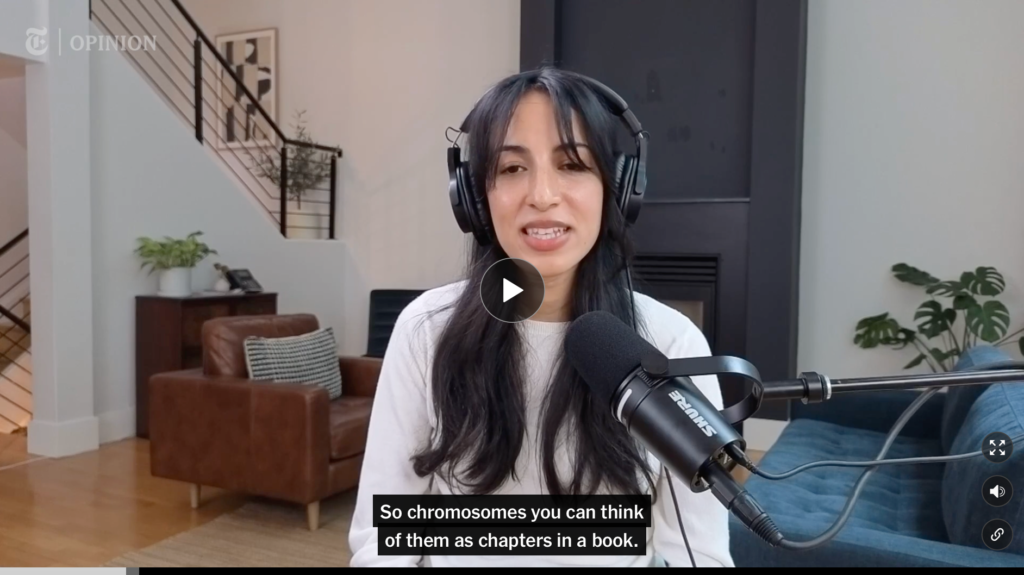
Today’s inspiration for a reflection on the value of learning to think is Ross Douthat’s interview with CEO Noor Siddiqui. Her company, Orchid, provides “full” genetic testing of IVF embryos to parents—evidently the first to do so.
Throughout the conversation, Siddiqui comes off as a pleasant, mild-mannered, well-spoken friend who’s here to help you. She is always on-point putting forward Orchid as a beneficent purveyor of technology that will help parents “do what’s best for their child.”
Unfortunately, her position coincides with insidious commercial interests and an intellectual sleight-of-hand. As in: am I really doing what’s best for my child if I decide it’s not good enough to have in the first place?
Unpacking her position and coming to a moral decision about Orchid’s service is not an easy task. There is a complex history of eugenics to explore, as well as understanding the science involved. The moral question of “who in society gets to control what and why?” dimension is complex, if you allow that it may be profoundly unfair that wealthy parents have access to this tool while poor parents will not. And this is all just the tip of the proverbial “what it means to bring a child into this world” iceberg.
Indeed, Siddiqui’s foundational position that “parents want what’s best for their children” threatens to undermine our attempts to tease apart her motivations from our own. Indeed, it’s not in her best interest to undermine her company’s value, even when it threatens a core tenet of our social life. Equality, it seems, is steamrolled here by a sort of capital-techno-futurism—a belief that we should be able to buy our way to genetic “superiority.”
These days an LAE is expensive. It is often considered a distraction from a career. Is it worth the cost?
Here at least, my LAE has kicked in an helped me put a CEO’s claims and sales pitch into a broader socio-historical context. It allows me to define a conceptual position to support my responses: “that’s not right” and “that’s not moral” and “that doesn’t square with my goals for society.” It allows me to ask more theoretical questions like, “is she evil, misguided, or just seeking a different outcome of our combined social life than myself”?
These aren’t easy questions to sit with, but they’re worth a lot to me.
Additional notes/inspirations:
- Does Siddiqui act from a position of “moral failure” or “moral ineptitude”? In other words, is she ignorant of larger issues, being dishonest with herself, or simply against equality?
- There is a lot of doubt these days about the value of a LAE (via Forbes).
- Does a LAE need a rebrand (also via Forbes)? The “liberal” part seems to be an issue.